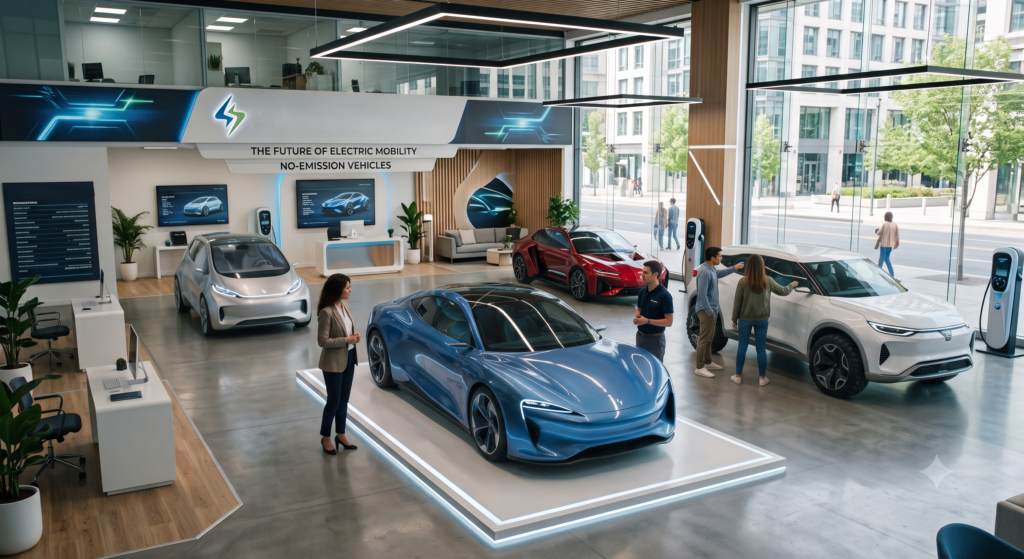
Canada’s clean transportation sector continues to evolve through stronger electric vehicle adoption, innovative charging solutions, and community-focused mobility programs. Recent developments highlight how government incentives, rising fuel costs, infrastructure innovation, and equitable transportation initiatives are accelerating the country’s transition toward lower-emission mobility. From growing consumer demand for electric vehicles to new approaches for commercial fleet charging and inclusive transportation programs in Vancouver, these initiatives demonstrate the diverse strategies shaping Canada’s sustainable transportation future.
Electric vehicle adoption in Canada gained significant momentum during the first half of 2026. According to Statistics Canada’s latest motor vehicle sales data, EV sales reached 21,574 units in March, representing a nearly 75% year-over-year increase. Sales have steadily increased throughout the year, rising from 8,826 units in January to 12,626 in February before easing slightly to 17,795 in April. Overall, the first four months of 2026 recorded approximately 21% higher EV sales compared with the same period in 2025.
A key contributor to this growth has been the federal government’s Electric Vehicle Affordability Program (EVAP), introduced in February 2026. The program provides rebates of up to $5,000 for fully electric vehicles and up to $2,500 for hybrid models. Following the cancellation of the previous federal rebate program in early 2025, EV sales slowed considerably. The return of purchase incentives has helped improve vehicle affordability and encouraged more consumers to consider electric transportation.
Eligibility for EVAP requires vehicles to be manufactured in Canada or in countries with free trade agreements with Canada. Most eligible vehicles must have a purchase price of $50,000 or less, although Canadian-made vehicles are exempt from the transaction value limit. The program will remain available until 2030, but rebate values will gradually decrease each year after 2026.
Higher gasoline prices are also influencing consumer decisions. Supply disruptions affecting global oil markets have contributed to rising fuel costs across Canada. During the week of June 29, the national average gasoline price reached 161.1 cents per litre, compared with 134.0 cents per litre one year earlier. Vehicle dealers report that many customers are seeking to replace fuel-intensive trucks and SUVs with electric alternatives to reduce monthly operating costs.
Buyers should also verify rebate eligibility before purchasing and understand that dealerships submit rebate documentation directly to Transport Canada, with approved incentives applied to the final purchase or lease agreement.
A new report from the Pembina Institute suggests that commercial fleet operators in British Columbia are increasingly interested in shared and subscription-based charging solutions as alternatives to building dedicated charging infrastructure.
The report surveyed 16 municipal, government, and private fleet operators across British Columbia. Every participant expressed willingness to adopt at least one shared charging model, while 70% indicated they were very likely to implement these approaches.
Researchers identified several emerging charging models designed to reduce infrastructure costs and improve charger utilization. These include charging hubs operated by charging point providers, jointly owned multi-fleet charging facilities, business-funded charging partnerships, peer-to-peer charger sharing between fleets, charging-as-a-service programs managed by third-party providers, truck-as-a-service offerings from manufacturers, and battery-as-a-service solutions based on battery swapping.
Among the available options, shared charging hubs and peer-to-peer charging attracted the strongest interest, with approximately 80% of respondents supporting these models. Charging-as-a-service also received considerable interest, particularly among private fleet operators.
Cost savings emerged as the primary motivation for adoption. Approximately seven in ten respondents indicated they would participate in shared charging programs if membership costs were approximately half of their existing fuel expenses.
Fleet operators identified commercial truck parking facilities and retail locations as preferred sites for shared charging infrastructure. Some also highlighted the need for additional charging locations along the Highway 1 corridor through Burnaby, Coquitlam, Surrey, and Langley to better support commercial operations.
Many operators reported they would be comfortable sharing chargers between two vehicles each day, suggesting that collaborative charging could significantly improve charger utilization. However, respondents emphasized that charging facilities must provide sufficient space and electrical capacity to accommodate larger commercial vehicles while minimizing operational downtime.
The report also concluded that greater awareness of alternative charging models could encourage wider adoption among fleet operators. While the findings reflect a relatively small sample from British Columbia, they provide valuable insight into how collaborative infrastructure could support broader fleet electrification.
A new Clean Mobility Pilot in Vancouver is improving access to zero-emission transportation for lower-income residents through a community-focused approach that combines public transit, shared electric vehicles, education, and charging infrastructure.
The initiative is a partnership involving the BC Indigenous Housing Society, Aboriginal Housing Management Association, Kambo Energy Group, Create Climate Equity, and Natural Resources Canada, which contributed $500,000 toward the project. The program serves residents living at 1315 and 1395 Davie Street in Vancouver.
Developed through community engagement conducted in 2024, the pilot was designed to address transportation barriers while supporting equitable access to sustainable mobility options.
Since December 2025, fifty residents have received free public transit passes, resulting in nearly 3,500 trips using Vancouver’s bus network, SeaBus, and SkyTrain services. The project has also introduced an on-site Modo electric car-share vehicle, with nine registered drivers currently participating.
To further strengthen clean mobility access, an electric vehicle charging station was installed at the residential site in March. Educational booths and workshops are also helping residents learn about electric vehicle ownership, charging, and other zero-emission transportation options.
Project partners emphasize that clean transportation should remain accessible to all communities regardless of income. By combining transportation services, charging infrastructure, and community education, the pilot aims to reduce barriers while creating practical, inclusive mobility solutions that can inform future programs across Canada.
Canada’s clean transportation landscape continues to advance through coordinated efforts that improve affordability, expand charging infrastructure, and promote equitable access. As governments, industry, and community organizations collaborate on innovative solutions, continued investment in consumer incentives, fleet charging networks, and inclusive mobility programs will play an important role in supporting Canada’s transition toward a lower-emission transportation system.
Stay informed on the latest developments in renewable energy, electric transportation, and clean technology as Canada continues to accelerate its transition toward a more sustainable future.
 Connect with us on LinkedIn: DLVR